The Sequela Christi
What is it and can we live it?
"Jesus said to the rich young man, 'If you would be perfect, go, sell what you possess and give to the poor, and you will have treasure in heaven; and come, follow me.' " (Mt 19:21)
In Chapter One of Veritatis Splendor, John Paul II uses the term Sequela Christi when reflecting on Jesus' response to the rich young man in Matthew 19. The notion of Sequela Christi, means to live a life modeled after the life of our Lord and Savior Jesus. More simply put it means the following of Christ. John Paul II, in reflecting on this concept, identifies it as the primordial foundation of Moral Theology.
The simple understanding is this... If, as Vatican II states in Gaudium et Spes, Christ came to show man who he is and what he is called to be, then living a life modeled after Christ will be to live a life in accordance with the nature God gave us. And living a life in accordance with our nature will be the life God wishes us to live, a life of beatitude.
But, how do we know how to live this Sequela Christi? We must look to the life, teaching, works and Passion of Christ to find an answer to that question. That is what we are going to explore.
Christ as a Model of Prayer
In order to know the path of Christ so we may follow it we must know Him. In order to know someone we must spend time with them. That is done through prayer. We see time and again Jesus praying in the Gospels. We see Him praying for others (Jn 17:9), we seem Him praying alone (Lk 5:16), we seem Him teaching us to pray (Lk 11) and most of all we see Him praying to and with the Father (Lk 22:42). It is through prayer that we learn dependence on God and learn to forgo our prideful ways.
Christ as a Model of Meekness
In our modern world meekness is seen as a something to be avoided. Someone who is meek is weak and open to being walked over by people. But Christ tells us, "Blessed are the meek, for they shall inherit the earth." (Mt 5:5). We see Christ humble Himself for our humanity and join us as a child in a manger. We see Him telling His disciples, "Learn from me, for I am meek and humble of heart." It is meekness and humility that the evil one most fears. It is opposed to pride and the consequences that come with it. Meekness demonstrates a harness and control of power, not a prideful use or flaunting of power. It is through meekness that we can truly relate to those around us who suffer and need our mercy.
Christ as a Model of Mercy
 Pope Francis has declared 2016 to be the Year of Mercy so it is only fitting to see how we can model Christ in engaging others with mercy. We see Christ's mercy in His teaching about the Father in the Parable of the Prodigal Son (Lk 15:11-32). We see Christ's mercy in His dealing with the Samaritan woman at the well when she begins the discussion very dismissive but in the end is basking in the love and mercy of Jesus. (Jn 4:1-29) And we see His mercy taught most poignantly in His passion when He begs the Father to forgive the soldiers driving the nails into His wrists on Calvary (Lk 23:34). It is Christ Mercy we must bring to the world around us, a world is such need of mercy. We can do this tangible by following His dealings with the poor of Israel.
Christ as a Model of Love for the Poor

Near the beginning of Jesus' ministry we see a scene at the temple when Jesus unrolls the scroll and reads from Isaiah about Himself, "The Spirit of the Lord is upon me, because he has anointed me to preach good news to the poor. He has sent me to proclaim release to the captives and recovering of sight to the blind, to set at liberty those who are oppressed, to proclaim the acceptable year of the Lord." Christ came to preach the good news to the poor. (Luke 4:16-19). We see His love of the poor when he honors the poor widow who gave all she has to the church. (Mk 12:41-44). We see His love for the poor when he dines at the house of a ruler and says, "When you give a dinner or a banquet, do not invite your friends or your brothers or your kinsmen or rich neighbors, lest they also invite you in return, and you be repaid. But when you give a feast, invite the poor, the maimed, the lame, the blind, and you will be blessed, because they cannot repay you. You will be repaid at the resurrection of the just." (Lk 14:1-16)
Christ as a Model of Love of Neighbor

One day as the Sad'ducees were challenging Jesus, they asked Him, "which commandment is the first of all?" He went beyond just the first and said, "The first is, 'Hear, O Israel: The Lord our God, the Lord is one; and you shall love the Lord your God with all your heart, and with all your soul, and with all your mind, and with all your strength.' The second is this, 'You shall love your neighbor as yourself.' There is no other commandment greater than these." Throughout the Gospel's, we see Jesus teach about love of neighbor. He does so in the Parable of the good Samaritan when asked, "Who is our neighbor?" This example is especially important because when one knows the context and social situation they realize that the Jews and Sammaritan's were not friends, but Jesus calls us to, "Love our enemies and pray for those who persecute us." (Mt 5:43) But to do so takes a radical trust in God.
Christ as a Model of Obedience to God the Father
When God formed man He formed us with free will and in a state of original innocence. But Adam and Even, our primordial parents, chose not to obey God and instead followed the temptations of the Evil One. The consequence of this disobedience is our inability to live the
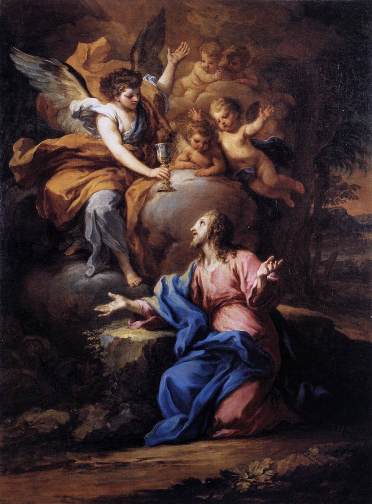
Sequela Christi. It is this obedience we need to relearn from Jesus. It is learned at no greater time in Jesus' life than in His prayer of radical obedience to the Father spoken in the Garden of Gethsemane. Knowing that the crucifixion was on the horizon, Jesus still had the strength be obedient to the Father and accept the cup that was being offered to Him.
And he said, "Abba, Father, all things are possible to thee; remove this cup from me; yet not what I will, but what thou wilt." (Mark 14:26)
He could make this prayer because He trusted God.
Christ as a Model of Trust in God

Jesus' will was so perfectly aligned with the will of the Father that He could place His trust in the Father so completely and obey the will of the Father unto death.
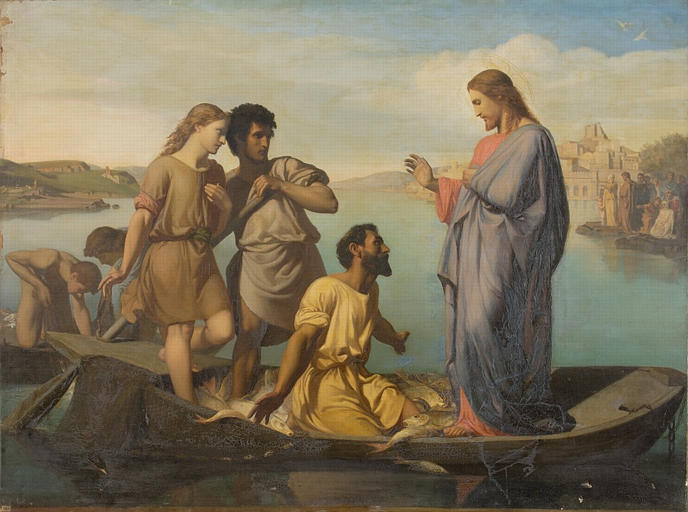
Can you do that in your life? Can you follow the apostles lead and drop your nets to follow Jesus? (Mt 4:20) It takes a radical trust and abandonment of will to do that. It takes an interior conversion of the heart, and an interior conversion that will manifest itself in exterior ways. We can do that and we have guides, fellow pilgrims like Saint Francis of Assisi.
Saint Francis and the Sequela Christi
We can look to the lives of the Saints when we need help in knowing how to drop our nets and follow Jesus. A perfect example of this is Saint Francis of Assisi. His life was one of radical abandonment to follow Jesus, to demonstrate the Sequela Christi.
Saint Francis, A Model of Meekness and Humility
About Saint Francis, Saint Bonaventure says,
"Humility, the guardian and glory of all virtues, abounded in rich fullness in [Saint Francis]. In his own estimation, he was naught but a sinner, whereas in very truth he was the mirror and brightness of all saintliness"
Saint Francis named his brother
Minors and that the rulers of his order should be called ministers after Christ's words, "Whoseover will be great among you, let him be your minister". On one occasion on the of the Brothers Minor had a vision of heaven in which the throne left vacant by the fallen angels was reserved for Saint Francis. Upon being informed of the vision, Saint Francis responded, "If any man, howsoever guilty, had received such mercy from Christ as I, I verily think he would have been far more acceptable unto God than I."
Saint Francis, His Devotion to Prayer
Saint Francis lived a life of fervent prayer. On one occasion as he rode an ass through the city of Borgo San Sepolcro he was mobbed by the townsfolk who marveled at his holiness. Btu he was so fervent in his prayer that he did not even recognize the people and upon arriving at the leper settlement he was headed his brothers told him and he had no recollection. Much like Jesus Saint Francis loved to pray in solitude and upon returning from hi solitude he was often changed almost into another man.
Saint Francis, His Radical Trust In God
One of the most famous accounts of his trust in god came from his travels to Persia where the Muslims and Christians were at all out war. Saint Francis traveled to the Sultan of Babylon to preach the Gospel and suffer a martyrs death. Upon arrival in Babylon he miraculously obtained an audience with the Sultan who, rather than martyring Saint Francis, honored and glorified the faith and trust in God demonstrated by Saint Francis.
Do we live the Sequela Christi?
The
Sequela Christi is the path to doing "the good", to living the divine beatitude. In order to follow that path we must act as Jesus acted, we must come to know Him, to trust Him and to bend our will to His. The desire sought in the
Sequela Christi is summed up in the following prayer of Flannery O'Conner,
Please help me to know the will of my Father—not a scrupulous nervousness nor yet a lax presumption but a clear, reasonable knowledge: and after this give me a strong Will to bend it to the will of my Father.


 Pride vs. Humility
 Chastity vs. Lust