Sunday, October 22, 2017
How Jesus in the Eucharist Brought Me to Him

Friday, April 21, 2017
Servant of God and Marine
 Vincent Robert Capodanno was born in 1929 in Staten Island, New York and was awarded the Medal of Honor for “...conspicuous gallantry and intrepidity at the risk of his life above and beyond the call of duty as a Chaplain of the 3d Battalion, in connection with operations against enemy forces.” (Medal of Honor Citation for Fr. Capodanno)
Vincent Capodanno was the 10th son of Vincent and Rachel Capodanno, Italian immigrants in New York. He had three brothers who served in World War II and this experience instilled in him a strong sense of patriotism that complimented his deep faith in God and love of his Catholic faith, a faith demonstrated by daily mass attendance before high school classes and during his short time at Fordham University.
After little over a year at Fordham University, Vincent Capodanno followed the call of God and entered the Maryknoll Missionary Seminary in Ossining, New York. After nine years of vigorous formation, he was ordained a priest on June 14, 1958, by Cardinal Spellman, then Archbishop of New York. From there he would travel to Taiwan to minister to the native Taiwanese by administering the sacraments, teaching native catechists and providing food and medicine to those in need. After his missionary assignments in Hong Kong and Taiwan, he petitioned his Maryknoll superiors to be released for a vocation as a military chaplain. In 1965 they granted his request and he was commissioned as a Lieutenant in the Marine Corps on December 28, 1965.
His first assignment was to the 1st Battalion 7th Marines in Vietnam, an assignment he began on Holy Week in 1966. During this assignment, he focused on the young enlisted troops and was their constant companion. He spent his days reassuring them, consoling them and giving them spiritual guidance and grace. He loved this work and upon completion of his first tour of duty in April 1967 he requested an extension. His extension was granted and in June of 1967, he was assigned to the 3rd Battalion, 5th Marine Regiment.
It was in this division that Father Capodanno would follow in the footsteps of our Lord and Savior, Jesus Christ and give his life for others. On September 4, 1967, Father Capodanno and his fellow Marines encountered the enemy at 0430 in the morning near the village of Dong Son in the Que Son Valley. By 0915 26 marines had been confirmed dead and their commander was requesting reinforcements. Throughout the devastating battle Fr. Capodanno valiantly moved among the battle lines both helping injured Marines to safety and providing last rites and comfort to the wounded and dying. After having been wounded by an exploded mortar round and losing a portion of his right hand Fr. Capodanno refused medical treatment and instead continued to serve his Marines. He encountered a wounded medic and despite his position 15 yards from an enemy machine gunner, Fr. Capodanno rushed to provide aid to the mortally wounded medic and was killed by 27 bullets from the enemy machine gunner. Fr. Capodanno died in the service of God and his fellow Marines not only upholding the finest traditions of the U.S. Naval Service but bringing the light of Christ to his fellow Marines in times of great darkness.
Father Capodanno was awarded the Medal of Honor on January 7, 1969, and was declared a Servant of God by the Catholic Church on May 21, 2006. A Sainthood cause has been opened for Father Capodanno.
God of peace, You who weep
at the violence and wars between your children,
help us to walk in the footsteps of your Son.
In our darkest hour be our light
and show us the way to help those in greatest need.
Draw to Yourself those innocent victims who
find themselves surrounded by danger and destruction.
Hear the prayers of all who cry out to you for deliverance.
Through the intercession of Vincent Capodanno, Servant of God,
grant strength to the weak, courage to the fearful
and hope to those who mourn.
Above all, direct our hands this day to reach out and comfort
all who yearn for the coming of Your kingdom on earth.
at the violence and wars between your children,
help us to walk in the footsteps of your Son.
In our darkest hour be our light
and show us the way to help those in greatest need.
Draw to Yourself those innocent victims who
find themselves surrounded by danger and destruction.
Hear the prayers of all who cry out to you for deliverance.
Through the intercession of Vincent Capodanno, Servant of God,
grant strength to the weak, courage to the fearful
and hope to those who mourn.
Above all, direct our hands this day to reach out and comfort
all who yearn for the coming of Your kingdom on earth.
Amen.
Fr. Capodanno, Pray for us.
Ref:
https://www.youtube.com/watch?v=lLR-rJYPlQo
Thursday, April 20, 2017
Saint Peter Julian Eymard
 Peter Julian Eymard was born in 1811 in LaMure, France and is known for his deep devotion to Jesus in the Eucharist, a devotion which was manifested itself in his early childhood years. When he was 5 years old he vanished from his home only to be found by his sisters in the local parish church standing in front of the tabernacle of the high altar. When asked what he was doing, he told his sisters, “I am here listening to Jesus”
As a teenager, he worked for his father’ business making cutlery. Peter Julian wanted to become a priest but his father, having lost 8 children, did not want his only remaining son to become a priest. Following his father's death at age 18 he answered the call of God and joined the seminary at age 18. On July 20, 1834, after completing his training in the seminary he, was ordained a priest in the diocese of Grenoble at age 23. He served in this capacity until August 20, 1839, at which time he entered the religious life and professed vows in the Society of Mary, an order popularly known as the Marists. It was as a Marist priest that the devotion to the Eucharist he had since youth would flourish.
Although he was naturally drawn to contemplation, he was known as a devoted and energetic priest who was an educator and an exceptional preacher. In his journeys around France, he would encounter various manifestations of eucharistic piety that were popular at that time in France. Although he had a busy schedule supporting lay organizations, preaching extensively and educating the laity, the eucharistic devotions he encountered allowed him to express his contemplative nature. Being drawn closer and closer to the Eucharist his primary calling from God became clear in May of 1845. During a Eucharistic Procession in Lyons, he had an intense encounter with Jesus in the Blessed Sacrament that would resolve him to “bring all the world to the knowledge and love of our Lord; to preach nothing but Jesus Christ, and Jesus Christ eucharistic.” This devotion to the Eucharist and promoting what the Second Vatican Council would eventually call the “source and summit” of the Catholic Faith, eventually led Peter Julian to leave the Marist Order with the intent of founding a religious congregation dedicated to the Eucharist.
In May of 1856, after having proposed a Eucharistic community focused on evangelizing those estranged from the Church to the Bishop of Paris, Father Eymard was granted approval for his order. Peter Julian focused on the working class men of Paris and attracted many followers. Working with the poor laborers of Paris presented Peter Julian the unique challenge of not being able to provide food or shelter for the members of his community. By God’s blessing, they were supported by a neighboring convent and he was able to continue his mission. In 1858 in collaboration with Marguerite Guillot he founded a congregation for women known as the Servants of the Blessed Sacrament. His work continued until his death in 1868. Peter Julian Eymard was canonized a saint in 1962.
Gracious God of our ancestors,
you led Peter Julian Eymard,
like Jacob in times past,
on a journey of faith.
Under the guidance of your gentle Spirit,
Peter Julian discovered the gift of love in the Eucharist
which your son Jesus offered for the hungers of humanity.
Grant that we may celebrate this mystery worthily, adore it profoundly,
and proclaim it prophetically for your greater glory. Amen.
Ref:
Saturday, March 25, 2017
The Good Philip
In Florence, on the 22nd of July in the year 1515 Philip Neri, the eldest of four children was born into a family of modest wealth but of Tuscan nobility. His father, Francesco was a notary and had a friendship with the Dominicans of Florence. It was this early relationship with the Dominicans that would set the foundation for Philips religious inclinations. At the age of 16, a wealthy uncle hired him into his business at S. Germano near monte Cassino. He worked hard and his uncle promised to make Philip and heir but Philip had other plans.
After working for his uncle for two years Philip sold all his possessions, cut himself off from any of his family's patronages and moved to Rome in 1533 to do charitable works and to study. Arriving in Rome without a penny to his name he took up residence in the house of Galeotto Caccia, who gave him a room in his home in exchange for acting as a tutor to Galeotto’s two sons. During his time in Rome as a layman, Philip Neri made a living as a tutor and did all he could to win souls for God by visiting people in the hospitals, shops, warehouses, banks and public places and exhorting them to follow Jesus. Over the next 17 years, he would attract many followers, especially young men who were attracted to his deep spirituality and joyous nature. In 1550 he considered ending his active wok and retire into solitude but God had other plans for him.
In 1551 at the behest of his spiritual director and confessor, Philip Neri was ordained a priest and expanded his ministry and focused on promoting the frequent reception of the sacraments of Confession and the Holy Eucharist. He would spend the hours from dawn until noon in the confessional and then celebrate mass. In his afternoons he would dedicate his time to the spiritual development of the young men of Rome. Through this ministry to young men, he attracted many men, both priests, and layman. Many of these priests worked with him to develop the spiritual life of those they encountered but though they lived and worked together they had no yet taken any vows. This band of priestly brothers worked out of Saint Girolamo Church in Rome, until in 1575, having grown in size, we recognized by Gregory XIII as the Congregation of the Oratory and were given the Church Saint Maria in Vallicella. This newly found order was founded with the intention of sanctifying themselves through the accomplishment of their priestly duties and to work for the sanctification of their neighbors.
Saint Philip Neri died in 1595 on the 26th of May after having spent the day in the confessional. He was beatified in 1615 by Paul V and canonized by Gregory XV in 1622.
Saint Philip Neri, pray for us.
 |
| The Madonna Appearing to Saint Philip Neri Sebastiano Conca |
Saturday, March 18, 2017
Was King Henry VIII A Willing Reformer?
We’ve all, at one time or another heard the story. Henry VIII, the King of England, split from the Catholic Church and divorced or killed his wives so he could have a male heir. While there is truth behind this picture of Henry VIII it might not be the full picture.
 |
| Portrait of Henry VIII by Hans Holbein the Younger |
The Defender of the Faith
On the 11th of October in 1521, Pope Leo X declared King Henry VIII the Fidei Defensor (a.k.a. Defender of the Faith) This was done in response to Henry’s writing of a book titled Defence of the Seven Sacraments. In Defence of the Seven Sacraments, Henry defends the teaching of the Catholic faith against the heresies promoted by Martin Luther. Regarding marriage, he defends the indissolubility of marriage based on Jesus’ words in Matthew 19. He also dedicates the book to Pope Leo X and in a letter to the Pope states...
“As We Catholic sovereigns should uphold religion, when We saw Luther’s heresy running wild, for the sake of Germany, and still more love of the Holy Apostolic See, We tried to weed out this heresy.”
Henry goes on further to subject the contents of his work to the approval of Pope Leo X.
How could a man declared the Defender of the Faith, a staunch defender of the indissolubility of marriage, and a dedicated supporter of the Holy See turn around and become a tyrant who broke from Rome, divorced numerous wives and execute countless Catholics in his country?
The Rest of the Story
Some say he was a capricious tyrant who defended the faith so long as it suited him and his political gain. But is there another possibility? Could something have happened that led to the downfall of the Defender of the Faith? Three Researchers from the Department of Neurology at the Yale School of Medicine think so.
In a recent study published in the Journal of Clinical Neuroscience, Ikram, Sajjad and Slardini delve into the medical history, biographies and personal letters of King Henry VIII to evaluate this question. What they found was a man who was “vigorous, generous and intelligent in his youth” who turned into “a cruel and petty tyrant in his old age.” This transition happened after Henry received two successive head injuries one during jousting and one during hawking, the practice of pole vaulting over ditches filled with water. These occurred in 1524 and 1525 respectively. It was after these injuries that Henry would begin his acts of tyranny. He then suffered another severe head injury while jousting in January of 1536 and in May of 1536 he would condemn Anne Boleyn to death. She would not be the only wife executed on the orders of the King, Katherine Howard, wife number five, was executed in 1542.
Is it possible that King Henry VIII was not culpable for his actions separating the Church in England from the Church in Rome? Should we end this blog with, “King Henry VIII, pray for us?”
Sacred Heart of Jesus, Have Mercy on Us.
Ref:
Ikram, Muhammad Qaiser, Fazle Hakim Sajjad, and Arash Salardini. "The head that wears the crown: Henry VIII and traumatic brain injury." Journal of Clinical Neuroscience, vol. 28, no. 1, 2016, pp. 16-19.
Henry VIII, King of England, Assertio septem sacramentorum, Defence of the Seven Sacraments, translated O’Donovan, Louis. https://archive.org/details/cu31924029398223
Monday, March 6, 2017
Saint Rose of Viterbo
Saint Rose of Viterbo
Saint Rose was born around the year 1233 to parents John and Catherine, a devout family that worked for the Poor Clare’s monastery in Viterbo, a commune of the Papal States. As a young child, she had a deep devotion to the poor which manifested itself through prayer and acts of aid. After receiving what was reported to be a visitation from the Blessed Virgin Mary, Rose became a Third Order Franciscan at the age of ten and began preaching against heresies that were being spread in the region of Viterbo. Through her preaching, she attracted many followers. She became what we today would refer to as a community organizer. In her late teenage years, she organized marches and protests in favor of Pope Innocent IV against the secular authorities of led by Fredrick II. Due to this action, the governor of Viterbo banished Rose and her family from their home city of Viterbo. Moving to Soriano, Rose and her family continued to preach in favor of the Church and Pope. Legend has it that in early December of 1250, Saint Rose predicted the death of Fredrick II and the Pope would be victorious in the struggles. Later that month on the 13th Fredrick II died and the pope regained control of the papal states. Her family would move back to Viterbo in 1251 and Saint Rose would attempt to join the Poor Clare’s convent that her parents worked in but because her family did not have the means to support her she was not accepted into the convent. Saint Rose died on March 6th in 1252 and was interred in that convent five years later on September 4th. She was canonized 200 years later by Pope Callixtus III.
There are two stories of miracles that accompany the life of Saint Rose. At a very young age, a favorite aunt of hers took ill and died from the sickness. It was said that, when her aunt was laid in the coffin, the three-year-old Rose knelt down, lifted her hands in prayer and upon praying the name of her aunt she rose from the coffin and from the dead.
The second miraculous story of Saint Rose, came later in her life when her family was exiled from Viterbo. Before returning to Viterbo they had settled in the town of Vitorchiano. A sorceress was gaining renown and Rose would preach against her. Through her preaching, Rose was able to convert the sorceress’ followers but the sorceress remained unrepentant. To convert the sorceress Rose built a wooden pyre in the town square, climbed atop and had it lit. She stood amidst the flames unaffected for three hours. This miraculous event demonstrated the power of God and converted the sorceress.
Miracles surrounding Saint Rose of Viterbo continue to this day. Saint Rose of Viterbo is one of the incorruptibles. Her skin has darkened but remains flexible and her internal organs, having been evaluated in 2010, remain in good condition.
Saint Rose of Viterbo, Pray for us.
 |
| Pope Emeritus Benedict XVI prays at the body of Saint Rose of Viterbo |
References:
1. https://americaneedsfatima.org/Saints-Heroes/st-rose-of-viterbo.html
2. Cleary, G. (1912). St. Rose of Viterbo. In The Catholic Encyclopedia. New York: Robert Appleton Company. Retrieved March 6, 2017: http://www.newadvent.org/cathen/13193a.htm
3. Miller, Fr. Don O.F.M, Saint of the Day: Saint Rose of Viterbo. Retrieved March 6, 2017: https://www.franciscanmedia.org/saint-rose-of-viterbo/
4. Swaim, Colleen. Radiate: More Stories of Daring Teen Saints. Liguori Press, Missouri (2012)
Monday, February 20, 2017
The Battle of Poiters and Charles Martel the Hammer
 |
| Charles de Steuben's Bataille de Poitiers en October732 depicts a triumphant Charles Martel (mounted) facing 'Abdul Rahman Al Ghafiqi (right) at the Battle of Tours. The Celtic Cross in the background is an anachronism, such crosses being unknown at the time in the environs of Tours. |
With the collapse of the Western Roman Empire, Europe fell into disarray. Due to this vacuum of power, Islam was able to spread. Beginning with the Prophet Muhammad in Mecca in 622, Islam would expand to control Arabia, North Africa, Palestine, Persia, Spain, and parts of India. It was a rise of power unseen before in history. In merely one hundred years a small group of Muhammad’s followers would become one, if not the most dominant force surrounding the Mediterranean and beyond.
Uniting the tribes of Arabia under a common monotheistic religion, Muhammad was able to conquer Syria by 636, Alexandria by 642, Carthage by 697 and finally crossing the Straight of Gibralter in 711 they moved into Spain. To all observers it appeared that Islam would become the dominant religion of Europe, surpassing Christianity. Having established control of the Iberian Peninsula, the Muslim general Abd ar-Rahman departed his base in Pamplona and crossed the Pyrenees into the territory controlled by the Franks. He would make it across the Garonne River, pass the city of Bordeaux and reach all the way to the town of Poitiers with little resistance by local forces. It was not until he encountered Charles Martel, known by historians as “the Hammer”, that the advance of Islam would be checked.
One of the main contributing factors to the rapid rise and movement of Islam throughout Norther Africa and the Iberian peninsula was a use of mounted soldiers. This was to serve as the Achilles heel of Abd ar-Rahmans forces when they encountered Charles Martel on the road from Poitiers to Tours. In what is known as the Battle of Tours, the Battle of Poiters and the Battle of the Palace of the Martyrs by Arab sources, Charles Martel controlling Frankish and Burgundian forces would defeat the advancing Muslims be relying on military tactics used by the Romans and Greeks for centuries. Rather than relying on the maneuver warfare of knights on horseback so often seen in popular depictions of Middle Ages warfare, Charles Martel’s forces, an assortment of spearman, light infantry and aristocratic nobles formed up on foot to hold firm the road from Poitiers to Tours. Here they would encounter and defeat the advancing Islamic invaders. They would methodically beat back the advancing horseman in what was described by the historian Isadore as “the men of Europe, an immovable sea, stood close to another and stiffened like a wall, as a mass of ice they stood firm together.” And “with great blows of their swords, they beat down the Arabs.” With fortitude and strength, the men of Europe had preserved Christianity in Europe on that fateful day in October 732. If not for them Europe would likely have been praying to Mecca five times a day.
Ref:
Curtis, Lang and Petersen, The 100 Most Important Events in Christian History. Flemming H. Revell, Grand Rapids MI. 1991.
Hanson, Victor Davis, Carnage and Culture: Landmark Battles in the Rise of Western Power. Anchor Books, New York. 2001.
Sunday, February 12, 2017
The Stylites
The rise of Monasticism in the 4th century continued in the 5th and 6th centuries. In the Christian east, this monasticism and attraction to asceticism manifested itself in many bizarre and extreme forms. One of these odd forms of hermetic asceticism can be seen in the Stylites, or “pillar-hermits”.
The Stylites were Christian ascetics that chose to live atop a column or pillar (Greek: stylos). These rare examples of asceticism were known for their great holiness and could be found throughout eastern Christendom. Stylites lived for extended periods atop pillars typically with an area of four square yards. They were exposed to the elements, though sometimes they had a roof, and received sustenance from disciples that brought meager amounts of food to them by climbing up ladders. They spent most of their time in prayer but were also known to perform pastoral work among those who gathered around their columns.
 |
| Ruins of the Church of Saint Simeon Stylites, located 30km northwest of Aleppo Syria |
The first known Stylite was Saint Simeon the Elder who mounted his column in Syria in 423 AD. He was born in Sisan about 388 and took up work as a shepherd before joining a monastery at age 16. due to his extreme asceticism and austerity, he was deemed unfit for communal life and was forced to quit the monastery. He became a hermit and lived a reclusive life in a hut in Telanissos in Syria. After three years he moved outdoors to a hill near one of Syria's main thoroughfares and was visited by travelers wanting to see the famous ascetic and ask his counsel. In order to escape this disturbance, he decided to live atop a pillar the first of which was 9 feet and finally, legend has it that, he ended up on a pillar 50 feet high. Atop his pillar, he conversed via letter with many people including the Emperor Theodosius, the Empress Eudocia and the Emperor Leo to whom Simeon wrote in favor of the Council of Chalcedon. He died in 459, having spent 37 years on his pillar. A church was built over his grave in the late 400s and his column was placed in the central court.
 |
| Wellcome Library, London |
Saint Simeon the Elder inspired many others to follow in his footsteps and his imitators include, Saint Daniel in Constantinople, Saint Simeon the Younger near Antioch, Saint Alypius near Adrianopolis, Saint Luke at Chalcedon and Saint Lazarus near Ephesus. Various other stylites lived throughout Greece and the Middle East and the only known stylite in the West was Saint Wulfaicus, a deacon near Yvoi, France who was forced by church authorities to descend. The longest reported period any Stylite spent atop their pillar was Saint Alypius who remained atop his pillar for, as legend has it, 67 years.
Ref:
Johnson, Paul. A History of Christianity. Simon and Schuster, New York. 1976
Thurston, Herbert. "St. Simeon Stylites the Elder." The Catholic Encyclopedia. Vol. 13. New York: Robert Appleton Company, 1912. 12 Feb. 2017 <http://www.newadvent.org/cathen/13795a.htm>.
Crocker, H.W. Triumph:The Power and Glory of the Catholic Church. Three Rivers Press, New York.2001.
Encyclopedia Britanica, Saint Simeon Stylites, www.britannica.com/biography/Saint-Simeon-Stylites
Encyclopedia Britanica, Stylites
https://www.britannica.com/topic/stylite
Sunday, February 5, 2017
The Rise and Condemnation of Arius
Arius was a layman from Alexandria who was ordained a priest by Achillas the Bishop of Alexandria. By all accounts, he was an eloquent, learned and holy man with a skill in disputation that surpassed many of his contemporaries. He likely could have been a father or doctor of the church except for his flawed belief about the divinity of Jesus. He promoted a theological position that viewed Jesus as a created and not eternal being, separate from the father. Alexander, the successor to Achillas demanded that Arius retract his position and Arius refused.(1) This was the beginning of the first great theological controversy in the history of the Church.
In response to the censorship of Alexander, Arius wrote to Eusebius, bishop of Nicomedia and kinsman of Constantine. In his letter to Eusebius sent via Ammonius he declares his opposition to Bishop Alexanders statements that there was, “always a God, always a Son;” “as soon as the Father, so soon the Son [existed];” “with the Father co-exists the Son unbegotten, ever-begotten, begotten without begetting;” “God neither precedes the Son in aspect or in a moment of time;” “always a God, always a Son, the Son being from God himself.”(2)
With the help of Eusebius, Arius continued his promotion of what many western bishops knew to be a heretical doctrine. Writing to many bishops throughout the eastern portions of the Roman Empire using scripture texts from Matthew 27, Mark 13 and John 14 Arius won many converts.(3) Tensions rose as more an more bishops sided with Arius. In 320 AD Bishop Alexander gathered all the bishops in his region to a synod in which they universally condemned Arius. Arius persisted and Alexander excommunicated him. It was a battle of wills.(4)
Arius left Egypt and headed East to Palestine then to the Nicomedia obtaining converts all along his path. In many cases disagreements turned to violence and Constantine, having just taken control of the entire Roman Empire by defeating the Eastern augustus Licinius took notice of the problems being cause in Alexandria and throughout the Eastern portions of his Empire. Taking an unprecedented step, Constantine convoked a council of all the bishops of the Roman Empire. Previously smaller councils would be convoked by local or regional bishops. This was the first universal council and it was declared by the Emperor himself.(5)
 |
| 16th-century fresco depicting the Council of Nicaea |
The council convened in the City of Nicaea in 325 AD so Constantine himself could participate.(6) Bishops from all over the Christian world we invited and attended. Notably absent was the Bishop of Rome, Sylvester, struggling from illness he sent two emissaries.(7) Somewhere between two and three hundred Bishops attended and all but two voted for what is known as the Nicene Creed, vindicating Alexander and condemning Arius and his followers. Their declaration read...
We believe in one God, the Father Almighty, maker of all things visible and invisible; and in one Lord Jesus Christ, the Son of God, the only-begotten of his Father, of the substance of the Father, God of God, Light of Light, very God of very God, begotten (γεννηθέντα), not made, being of one substance (ὁμοούσιον, consubstantialem) with the Father. By whom all things were made, both which be in heaven and in earth. Who for us men and for our salvation came down [from heaven] and was incarnate and was made man. He suffered and the third day he rose again, and ascended into heaven. And he shall come again to judge both the quick and the dead. And [we believe] in the Holy Ghost.
And whosoever shall say that there was a time when the Son of God was not (ἤν ποτε ὅτε οὐκ ἦν), or that before he was begotten he was not, or that he was made of things that were not, or that he is of a different substance or essence [from the Father] or that he is a creature, or subject to change or conversion — all that so say, the Catholic and Apostolic Church anathematizes them.(8)
(1) Laux, Fr John. Church History. Rockford:Tan Books and Publishers, Inc, 1989. p107
(2) Letter of Arius to Eusebius of Nicomedia, http://www.fourthcentury.com/urkunde-1/
(3) Schreck, Alan. The Compact History of the Catholic Church Cincinnati:Servant Books 2009 p25
(4) Laux p108
(5) Wilken, Robert L. The First Thousand Years: A Global History of Christianity. New Haven: Yale University Press 2012. p91
(6) ibid
(7) ibid, and Laux p109
Sunday, January 22, 2017
The Martyrdom of Ignatius of Antioch
The year was 107 AD and Theophorus (“Bearing God” in greek(1)) stood calmly and joyfully at the entrance to the floor of the Flavian Amphitheater. He was about to fulfill a desire held deep in his heart for more than 20 years. He was not only about to demonstrate to the citizens of Rome his undying love for his Lord and savior Jesus Christ, but he was about enter into “...a more deep and intimate relationship with the Lord.”(2) Theophorus, known today as Ignatius of Antioch, was about to be martyred in the Roman Colosseum on account of his unbreakable love for Jesus.
He came close before during the persecution of Christians by emperor Domitian, the self-proclaimed “Lord and God”(3) who compelled citizens to recognize him as such. Christians, Ignatius being one of them, were willing to die rather than place the emperor on par with Jesus, who they knew to be the one true God and many earned the crown of martyrdom. The Domitian persecution ended, but for Ignatius, it was a bittersweet victory. As the successor of Bishop Evodius, Ignatius was the third Bishop of Antioch. As Bishop and shepherd, Ignatius was joyful and relieved that God’s sheep, entrusted to him by Peter the Apostle(4), would no longer suffer persecution. Yet he still longed for the crown of martyrdom and the intimate relationship with his Lord and Savior that accompanied it.
It appeared now to Ignatius that Jesus’ words, “Ask, and it will be given you; seek, and you will find; knock, and it will be opened to you.” (Matt 7:7) were going to be demonstrated. Before he left on his journey to Rome and martyrdom, the Emperor Trajan visited the city of Antioch and discovered Christians refusing to offer sacrifice to the pagan Gods. The emperor called their leader, Bishop Ignatius, to answer for these transgressions. Trajan seeing the resolute nature of the Antiochan Christian leader declared,
“We command that Ignatius, who affirms that he carries about within him Him that was crucified, be bound by soldiers, and carried to the great [city] Rome, there to be devoured by the beasts, for the gratification of the people.”
To which Ignatius cried out to God,
“I thank you, O Lord, that You have vouchsafed to honour me with a perfect love towards You, and have made me to be bound with iron chains, like Your Apostle Paul.”(5)
From there he began his travels to Rome to fulfill his utmost desire. The journey was long, but he had the opportunity along the way to minister to Christians throughout the Empire. From the port of Seleucia in Syria, he headed to either Tarsus or Attalia. From there he traveled overland through Asia Minor and through Philadelphia, Sardis, and Smyrna, home to Polycarp, a fellow auditor Saint John the Apostle. From there he sent letters to the congregations of Ephesus, Magnesia, and Tralles encouraging them to follow their Bishop and avoid heresy. He also wrote to the citizens of Rome asking them not to act to prevent his martyrdom. Leaving there his party passed through Troas where he sent letters to the Christians of Philadelphia and Smyrna, and to Polycarp. From here they continued on by sea and land until they arrived in Rome where soon after his arrival Ignatius won his long-coveted crown of martyrdom in the Flavian amphitheater.(6)
Almighty ever-living God,
who adorn the sacred body of your Church
with the confessions of holy Martyrs,
grant, we pray,
that, just as the glorious passion of Saint Ignatius of Antioch,
which we celebrate today,
brought him eternal splendor,
so it may be for us unending protection.
Through our Lord Jesus Christ, your Son,
who lives and reigns with you in the unity of the Holy Spirit,
one God, for ever and ever.(7)
________________________________________________________
He came close before during the persecution of Christians by emperor Domitian, the self-proclaimed “Lord and God”(3) who compelled citizens to recognize him as such. Christians, Ignatius being one of them, were willing to die rather than place the emperor on par with Jesus, who they knew to be the one true God and many earned the crown of martyrdom. The Domitian persecution ended, but for Ignatius, it was a bittersweet victory. As the successor of Bishop Evodius, Ignatius was the third Bishop of Antioch. As Bishop and shepherd, Ignatius was joyful and relieved that God’s sheep, entrusted to him by Peter the Apostle(4), would no longer suffer persecution. Yet he still longed for the crown of martyrdom and the intimate relationship with his Lord and Savior that accompanied it.
It appeared now to Ignatius that Jesus’ words, “Ask, and it will be given you; seek, and you will find; knock, and it will be opened to you.” (Matt 7:7) were going to be demonstrated. Before he left on his journey to Rome and martyrdom, the Emperor Trajan visited the city of Antioch and discovered Christians refusing to offer sacrifice to the pagan Gods. The emperor called their leader, Bishop Ignatius, to answer for these transgressions. Trajan seeing the resolute nature of the Antiochan Christian leader declared,
“We command that Ignatius, who affirms that he carries about within him Him that was crucified, be bound by soldiers, and carried to the great [city] Rome, there to be devoured by the beasts, for the gratification of the people.”
To which Ignatius cried out to God,
“I thank you, O Lord, that You have vouchsafed to honour me with a perfect love towards You, and have made me to be bound with iron chains, like Your Apostle Paul.”(5)
From there he began his travels to Rome to fulfill his utmost desire. The journey was long, but he had the opportunity along the way to minister to Christians throughout the Empire. From the port of Seleucia in Syria, he headed to either Tarsus or Attalia. From there he traveled overland through Asia Minor and through Philadelphia, Sardis, and Smyrna, home to Polycarp, a fellow auditor Saint John the Apostle. From there he sent letters to the congregations of Ephesus, Magnesia, and Tralles encouraging them to follow their Bishop and avoid heresy. He also wrote to the citizens of Rome asking them not to act to prevent his martyrdom. Leaving there his party passed through Troas where he sent letters to the Christians of Philadelphia and Smyrna, and to Polycarp. From here they continued on by sea and land until they arrived in Rome where soon after his arrival Ignatius won his long-coveted crown of martyrdom in the Flavian amphitheater.(6)
Almighty ever-living God,
who adorn the sacred body of your Church
with the confessions of holy Martyrs,
grant, we pray,
that, just as the glorious passion of Saint Ignatius of Antioch,
which we celebrate today,
brought him eternal splendor,
so it may be for us unending protection.
Through our Lord Jesus Christ, your Son,
who lives and reigns with you in the unity of the Holy Spirit,
one God, for ever and ever.(7)
 |
| Painting of Ignatius of Antioch from the Menologion of Basil II (c. 1000 AD) |
________________________________________________________
(1) Church History, Fr. John Laux p 49
(2) The Martyrdom of Ignatius. http://www.newadvent.org/fathers/0123.htm. Ch 1.
(3) Scannell, Thomas. "Domitian." The Catholic Encyclopedia. Vol. 5. New York: Robert Appleton Company, 1909. 22 Jan. 2017. http://www.newadvent.org/cathen/05114b.htm.
(4) O'Connor, John Bonaventure. "St. Ignatius of Antioch." The Catholic Encyclopedia. Vol. 7. New York: Robert Appleton Company, 1910. 22 Jan. 2017. http://www.newadvent.org/cathen/07644a.htm.
(5) The Martyrdom of Ignatius, Ch 2
(6) “St. Ignatius of Antioch”, The Catholic Encyclopedia
(7) Liturgy of the Hours, Collect for the feast of Saint Ignatius of Antioch, October 17th.
Friday, December 2, 2016
Sunday, October 30, 2016
Living an Integrated Life as an Example to Others
In Lumen Gentium Chapter V, in what is known as the Universal Call to Holiness, the council fathers declared...

“All in the Church, whether they belong to the hierarchy or are cared for by it, are called to holiness. … The followers of Christ … have been made sons of God in the baptism of faith and partakers of the divine nature, and so are truly sanctified … It is therefore quite clear that all Christians in any state or walk of life are called to the fullness of Christian life and to the perfection of love, and by this holiness a more human manner of life is fostered also in earthly society”
A few paragraphs earlier,the fathers made it clear that we, as the laity, share in the Church’s mission as priests, prophets and kings when they stated...
“By baptism [the members of the Church, including lay people] are incorporated into Christ, are placed in the People of God, and in their own way share the priestly, prophetic and kingly office of Christ, and to the best of their ability carry on the mission of the whole Christian people in the Church and in the world” [emphasis added]
We, the laity, along with members of the clergy, are called to fulfill Jesus’ command to make disciples of all nations. It is our role as catechists to not only make disciples ourselves, but to also teach our students how both be disciples and make disciples themselves.
Unfortunately, we live in a culture which poses particular obstacles to that mission. We live in a time in which many of us have a split between the faith we profess and the way we live our daily lives. The council fathers in Gaudium et Spes 43 said this, “...deserves to be counted among the more serious errors of our age.” Therefore, we, as catechists, must provide those under our tutelage the tools to break down this ill conceived barrier between our faith and daily life.
 Randy Hain, in his article, Six Practical Ideas for Integrating our Catholic Faith with Work, provides some great tools we and our students can use in our everyday lives to help answer Jesus’ call to “Go and make disciples of all nations...”
His article begins by highlighting the need to go out into the workplace and evangelize those around us. He points out that this does not consist of running Bible studies at work or loudly evangelizing our co-workers. While Bibles studies are good things, we are more effective evangelizers in the work place by making it known we are Catholics and living a life of faithful holiness and a being light of Christ to those around us.
Three Obstacles to an Integrate Life
After his introduction, Mr. Hain, identifies three obstacles to integrating our faith into our daily work lives.
The first obstacle is our tendency to compartmentalize our lives. Many people have their “faith life”, their “home life”, their “work life” and never shall any of them meet. But that is not what God calls us to do. He calls us to be fully Catholic, all of the time.
The second obstacle is our time. We often view our relationship with Jesus as another event in the day. What we should be doing is adding everything else around our relationship with Him. He should be the center of our day.
The third obstacle is our refusal to surrender our lives to Jesus. If we surrender our lives to him the first two obstacles are easily overcome. Instead of surrender, we want to, like Adam and Eve in the garden, have it our way.
Six Practical Ideas to an Integrated Life
After identifying the obstacles, Mr. Hain, moves on to provide six practical things we can do to integrate our faith into our everyday lives. Those six are:
1. Devote one hour of each day to prayer and reading.
2. Devote more time to the Eucharist.
3. Be a light for Christ.
4. Let love drive our actions.
5. Practice active stewardship.
6. Start with the end in mind.
I strongly recommend you read his article to see how these can be put into action.
If we really want to follow Jesus’ call to make disciples, we have to go out into the world and do it. One of the best mindsets we can have to accomplish this is to recognize that God gives each of us talents. By using our God given talents, we allow Him the opportunity to put us where He needs us most. Randy Hain’s article helps us down the path of using our talents and with the grace of the Holy Spirit, help us to show those around us the merciful love of the Father and ultimately to bring souls to Him.
Sunday, October 2, 2016
Obedience
As taught to us by Jonah
This is a video I created for a class I'm taking. It had it's genesis in England one day when my wife and I were driving out to the Westminster Youth Retreat Center, SPEC. We were on our way to attend mass with their community and my wife asked what the readings were. So I told her the story of Jonah. She laughed.
This is a video I created for a class I'm taking. It had it's genesis in England one day when my wife and I were driving out to the Westminster Youth Retreat Center, SPEC. We were on our way to attend mass with their community and my wife asked what the readings were. So I told her the story of Jonah. She laughed.
Sunday, September 11, 2016
"Lord, Teach us to Teach"
What are we to do?
Something we as catechists need to address when embarking on our ministry is not only the question of what we are to teach but more importantly what God wants us to accomplish. What is our ultimate goal as a catechist when engaging those we catechize?
 We could provide our students with all sorts of information, after all the Catechism of the Catholic Church, the “sure norm for teaching” the Deposit of Faith, is made up of 2,865 articles. Sacred Scripture is made up of 73 books, over 1300 chapters and more than 35,000 verses. Add to Sacred Scripture our Sacred tradition which is made up of the writings of 266 Popes, numerous saints and the fathers of the church, and one finds more than a lifetime worth of knowledge to pass on to our students. But knowledge will not bring our students far enough. That is why in the General Directory For Catechesis the Church tells us...
Truly, to help a person encounter God, which is the task of the catechist, means to emphasize above all the relationship that the person has with God so that he can make it his own and allow himself to be guided by God.[1]
Our goal is clear...It is to help our students encounter the living God. But the question now is, how do we do that?
Let us turn to our Mother, the Church for that answer.
The Pedagogy of God
Christ, the final Adam, by the revelation of the mystery of the Father and His love, fully reveals man to man himself and makes his supreme calling clear.[2]
God incarnated Himself and became man. In becoming man, Jesus shows us the way to be fully and perfectly human. With that understanding as a basis, we can understand when the Church uses the term Pedagogy of God, she means that we should teach as God teaches and do so with the same end in mind. That end is the revelation of God’s love and His salvific work to restore man to Himself.
In the Old Testament God reveals Himself as a loving father through His works and deeds, through the covenants and promises and through the laws and prophets. He incarnates Himself as Jesus Christ in the fullness of time and we hear from the authors of the Gospels, Jesus’ revelation of the Father. In the age of the Church, the Holy Spirit rules and guides the Church so that she may effectively reveal God to man.[3]
It is this threefold pedagogy of revelation that makes God known to man and accomplishes the guiding of man to God. We as catechists must therefore not rely on our own created methods of instruction. While modern educational theories may be used to assist us instructing, they can not be the guiding principle behind our catechesis. The guiding principle of our catechesis must be rooted in faith in God’s Divine Pedagogy, for He is the only one that can bring man to Himself. We are just the ones who point our students to Him.

To point our students toward Jesus, we must look to Him to guide our action. He gives us this guidance when we turn to the Gospels. By prayerfully reading and meditating on His encounters with man we can learn from Him they way to guide souls to God. Looking to the Gospel of John in Chapter 15 we see that an important aspect of His pedagogy is establishing a bond of friendship with His apostles. He says, “I have called you friends, for all that I have heard from my Father I have made known to you.”[4] It is this bond of friendship we must build with our students to gain their trust so that we may lead them to Jesus. Without that bond of trust and friendship they will not follow us to Him.
 In Luke 11 we see Jesus teaching the apostles to pray.[5] We too must teach our students to pray, because it is in prayer that we encounter God’s desire for us. Reflecting on the encounter of Jesus and the Samaritan woman at the well, the Church recognizes that prayer is the encounter of God’s thirst with ours.[6]
There is a wealth of guidance we can glean from the Gospels. Therefore, if we desire to be effective catechists we must be students of the gospels. We must spend time prayerfully reading the life of our Lord.
Go and make disciples.
The making of disciples, should be the goal of every catechist. It is the task given to the apostles by Jesus prior to His Glorious Ascension. It is the charge that the apostles passed on to their successors the bishops who have handed that role on down through the centuries. And it is our role as lay catechists to support the Bishops in answering that call of our Lord Jesus Christ. The Church has given us the way to answer that call and that way is the Pedagogy of God.
Notes
1 General Directory for Catechesis(GDC) 139
2 Gaudium et Spes 22
3 GDC 139-142
4 Gospel of John 15:15
5 Gospel of Luke 11:1-2
6 Catechism of the Catholic Church 2560
Wednesday, May 4, 2016
Thursday, March 17, 2016
Virtue and Sin: Forces in Opposition
Virtue and Sin
Forces In Opposition

Sin:
"An offense against God as well as a fault against reason, truth, and right conscience. Sin is a deliberate thought, word, deed, or omission contrary to the eternal law of God. In judging the gravity of sin, it is customary to distinguish between mortal and venial sins."
Taken from the glossary of the Catechism of the Catholic Church

Virtue:
"A habitual and firm disposition to do the good. The moral virtues are acquired through human effort aided by God’s grace; the theological virtues are gifts of God."
Taken from the glossary of the Catechism of the Catholic Church.
Many people view Sin and Virtue to be opposites of each other. But the opposition posed between them is deeper and more important than simply two opposite sides of a coin like good and evil. It is that notion and how virtue leads us away from sin that I intend to explore in this post on Sin and Virtue.
The Reproductive Nature of Sin
Sin, by its nature, reproduces and reinforces itself. When man makes a choice, he makes himself to be a person who chooses such an action. Therefore, if a man chooses a sinful act such as theft, he becomes a thief. This aspect of sin is more than merely one of defining or classifying a person by their actions, but rather it is a modification of who and what the person is becoming.
Through repeated sinful acts, man engenders in himself a disposition to vice. Once that vice has taken root in man's being, it creates in him perverse inclinations. These perverse inclinations result in a clouded conscience and a lessened ability to judge the difference between good and evil. This lessened capacity for discernment of the good results in poor choices which result in sinful acts, which we see is the source of the disposition to vice and the cycle continues in a downward spiral away from the good and away from a participation in the love of God and the love of neighbor.
How do we stop this downward spiral that takes us away from God?
The Importance of Virtue to the Christian Moral Life
Saint Gregory of Nyssa tells us ...
"The goal of a virtuous life is to become like God."
... and Saint Thomas Aquinas tells us ...
"Through virtuous living, man is further ordained to a higher end, which consists in the enjoyment of God."
If sin takes us away from God, virtue directs us toward God.
Unlike sin, virtue forms in us firm attitudes, stable dispositions and habitual perfections of the intellect and will. Through a life of virtue we turn towards God not away from God. The Baltimore Catechism tells us that we are made by God to know, love and serve Him. To accomplish that purpose that we must live a life of virtue.
It is virtue that provides a counter to the downward spiral that is the consequence of sin. Let us look at two ways virtue helps us with the battle against sin.
 Pride vs. Humility
Pride turns us in on ourself. We want to determine the meaning of our life. It makes us the master of our own little part of the world. But when we turn to humility we open ourselves up to the divine plans of God, He who knows what is best for us. And in turning to God we say "Thy will be done" instead of "My will be done"
 Chastity vs. Lust
Many people think that the virtue in opposition to Lust is Puritanism, but this can not be further from the truth. Puritanism, while opposite of lust, is not the solution. Lust is the use of another human being as the means to ones sexual pleasure. Puritanism helps prevent against this but in doing so it views the other as something contrary to the good. The real virtue that opposes Lust is the virtue of Chastity. Chastity is the perfect expression of sexuality, one that is ordered to the profound respect of the other.
Virtue and Grace

"Human virtues acquired by education, by deliberate acts and by a perseverance ever-renewed in repeated efforts are purified and elevated by divine grace. With God’s help, they forge character and give facility in the practice of the good. The virtuous man is happy to practice them." (Catechism of the Catholic Church 1810)
Grace finds its source in Jesus' once an for all sacrifice on Calvary. Grace is God's free and unmerited gift to man which allows us to live a virtuous life and through that break the downward spiral that results from sin.
"...where sin increased, grace abounded all the more"
- Romans 5:20
Forces In Opposition
Sin:
"An offense against God as well as a fault against reason, truth, and right conscience. Sin is a deliberate thought, word, deed, or omission contrary to the eternal law of God. In judging the gravity of sin, it is customary to distinguish between mortal and venial sins."
Taken from the glossary of the Catechism of the Catholic Church

Virtue:
"A habitual and firm disposition to do the good. The moral virtues are acquired through human effort aided by God’s grace; the theological virtues are gifts of God."
Taken from the glossary of the Catechism of the Catholic Church.
Many people view Sin and Virtue to be opposites of each other. But the opposition posed between them is deeper and more important than simply two opposite sides of a coin like good and evil. It is that notion and how virtue leads us away from sin that I intend to explore in this post on Sin and Virtue.
The Reproductive Nature of Sin
Sin, by its nature, reproduces and reinforces itself. When man makes a choice, he makes himself to be a person who chooses such an action. Therefore, if a man chooses a sinful act such as theft, he becomes a thief. This aspect of sin is more than merely one of defining or classifying a person by their actions, but rather it is a modification of who and what the person is becoming.
Through repeated sinful acts, man engenders in himself a disposition to vice. Once that vice has taken root in man's being, it creates in him perverse inclinations. These perverse inclinations result in a clouded conscience and a lessened ability to judge the difference between good and evil. This lessened capacity for discernment of the good results in poor choices which result in sinful acts, which we see is the source of the disposition to vice and the cycle continues in a downward spiral away from the good and away from a participation in the love of God and the love of neighbor.
How do we stop this downward spiral that takes us away from God?
The Importance of Virtue to the Christian Moral Life
Saint Gregory of Nyssa tells us ...
"The goal of a virtuous life is to become like God."
... and Saint Thomas Aquinas tells us ...
"Through virtuous living, man is further ordained to a higher end, which consists in the enjoyment of God."
If sin takes us away from God, virtue directs us toward God.
Unlike sin, virtue forms in us firm attitudes, stable dispositions and habitual perfections of the intellect and will. Through a life of virtue we turn towards God not away from God. The Baltimore Catechism tells us that we are made by God to know, love and serve Him. To accomplish that purpose that we must live a life of virtue.
It is virtue that provides a counter to the downward spiral that is the consequence of sin. Let us look at two ways virtue helps us with the battle against sin.
 Pride vs. Humility
Pride turns us in on ourself. We want to determine the meaning of our life. It makes us the master of our own little part of the world. But when we turn to humility we open ourselves up to the divine plans of God, He who knows what is best for us. And in turning to God we say "Thy will be done" instead of "My will be done"
Chastity vs. LustMany people think that the virtue in opposition to Lust is Puritanism, but this can not be further from the truth. Puritanism, while opposite of lust, is not the solution. Lust is the use of another human being as the means to ones sexual pleasure. Puritanism helps prevent against this but in doing so it views the other as something contrary to the good. The real virtue that opposes Lust is the virtue of Chastity. Chastity is the perfect expression of sexuality, one that is ordered to the profound respect of the other.
Virtue and Grace

"Human virtues acquired by education, by deliberate acts and by a perseverance ever-renewed in repeated efforts are purified and elevated by divine grace. With God’s help, they forge character and give facility in the practice of the good. The virtuous man is happy to practice them." (Catechism of the Catholic Church 1810)
Grace finds its source in Jesus' once an for all sacrifice on Calvary. Grace is God's free and unmerited gift to man which allows us to live a virtuous life and through that break the downward spiral that results from sin.
"...where sin increased, grace abounded all the more"
- Romans 5:20
Sunday, February 7, 2016
The Sequela Christi
What is it and can we live it?
"Jesus said to the rich young man, 'If you would be perfect, go, sell what you possess and give to the poor, and you will have treasure in heaven; and come, follow me.' " (Mt 19:21)
In Chapter One of Veritatis Splendor, John Paul II uses the term Sequela Christi when reflecting on Jesus' response to the rich young man in Matthew 19. The notion of Sequela Christi, means to live a life modeled after the life of our Lord and Savior Jesus. More simply put it means the following of Christ. John Paul II, in reflecting on this concept, identifies it as the primordial foundation of Moral Theology.
The simple understanding is this... If, as Vatican II states in Gaudium et Spes, Christ came to show man who he is and what he is called to be, then living a life modeled after Christ will be to live a life in accordance with the nature God gave us. And living a life in accordance with our nature will be the life God wishes us to live, a life of beatitude.
But, how do we know how to live this Sequela Christi? We must look to the life, teaching, works and Passion of Christ to find an answer to that question. That is what we are going to explore.
Christ as a Model of Prayer
 In order to know the path of Christ so we may follow it we must know Him. In order to know someone we must spend time with them. That is done through prayer. We see time and again Jesus praying in the Gospels. We see Him praying for others (Jn 17:9), we seem Him praying alone (Lk 5:16), we seem Him teaching us to pray (Lk 11) and most of all we see Him praying to and with the Father (Lk 22:42). It is through prayer that we learn dependence on God and learn to forgo our prideful ways.
Christ as a Model of Meekness
 In our modern world meekness is seen as a something to be avoided. Someone who is meek is weak and open to being walked over by people. But Christ tells us, "Blessed are the meek, for they shall inherit the earth." (Mt 5:5). We see Christ humble Himself for our humanity and join us as a child in a manger. We see Him telling His disciples, "Learn from me, for I am meek and humble of heart." It is meekness and humility that the evil one most fears. It is opposed to pride and the consequences that come with it. Meekness demonstrates a harness and control of power, not a prideful use or flaunting of power. It is through meekness that we can truly relate to those around us who suffer and need our mercy.
Christ as a Model of Mercy
 Pope Francis has declared 2016 to be the Year of Mercy so it is only fitting to see how we can model Christ in engaging others with mercy. We see Christ's mercy in His teaching about the Father in the Parable of the Prodigal Son (Lk 15:11-32). We see Christ's mercy in His dealing with the Samaritan woman at the well when she begins the discussion very dismissive but in the end is basking in the love and mercy of Jesus. (Jn 4:1-29) And we see His mercy taught most poignantly in His passion when He begs the Father to forgive the soldiers driving the nails into His wrists on Calvary (Lk 23:34). It is Christ Mercy we must bring to the world around us, a world is such need of mercy. We can do this tangible by following His dealings with the poor of Israel.
Christ as a Model of Love for the Poor
 Near the beginning of Jesus' ministry we see a scene at the temple when Jesus unrolls the scroll and reads from Isaiah about Himself, "The Spirit of the Lord is upon me, because he has anointed me to preach good news to the poor. He has sent me to proclaim release to the captives and recovering of sight to the blind, to set at liberty those who are oppressed, to proclaim the acceptable year of the Lord." Christ came to preach the good news to the poor. (Luke 4:16-19). We see His love of the poor when he honors the poor widow who gave all she has to the church. (Mk 12:41-44). We see His love for the poor when he dines at the house of a ruler and says, "When you give a dinner or a banquet, do not invite your friends or your brothers or your kinsmen or rich neighbors, lest they also invite you in return, and you be repaid. But when you give a feast, invite the poor, the maimed, the lame, the blind, and you will be blessed, because they cannot repay you. You will be repaid at the resurrection of the just." (Lk 14:1-16)
Christ as a Model of Love of Neighbor

One day as the Sad'ducees were challenging Jesus, they asked Him, "which commandment is the first of all?" He went beyond just the first and said, "The first is, 'Hear, O Israel: The Lord our God, the Lord is one; and you shall love the Lord your God with all your heart, and with all your soul, and with all your mind, and with all your strength.' The second is this, 'You shall love your neighbor as yourself.' There is no other commandment greater than these." Throughout the Gospel's, we see Jesus teach about love of neighbor. He does so in the Parable of the good Samaritan when asked, "Who is our neighbor?" This example is especially important because when one knows the context and social situation they realize that the Jews and Sammaritan's were not friends, but Jesus calls us to, "Love our enemies and pray for those who persecute us." (Mt 5:43) But to do so takes a radical trust in God.
Christ as a Model of Obedience to God the Father
 When God formed man He formed us with free will and in a state of original innocence. But Adam and Even, our primordial parents, chose not to obey God and instead followed the temptations of the Evil One. The consequence of this disobedience is our inability to live the Sequela Christi. It is this obedience we need to relearn from Jesus. It is learned at no greater time in Jesus' life than in His prayer of radical obedience to the Father spoken in the Garden of Gethsemane. Knowing that the crucifixion was on the horizon, Jesus still had the strength be obedient to the Father and accept the cup that was being offered to Him.
And he said, "Abba, Father, all things are possible to thee; remove this cup from me; yet not what I will, but what thou wilt." (Mark 14:26)
He could make this prayer because He trusted God.
Christ as a Model of Trust in God
 Jesus' will was so perfectly aligned with the will of the Father that He could place His trust in the Father so completely and obey the will of the Father unto death.
Can you do that in your life? Can you follow the apostles lead and drop your nets to follow Jesus? (Mt 4:20) It takes a radical trust and abandonment of will to do that. It takes an interior conversion of the heart, and an interior conversion that will manifest itself in exterior ways. We can do that and we have guides, fellow pilgrims like Saint Francis of Assisi.
Saint Francis and the Sequela Christi
We can look to the lives of the Saints when we need help in knowing how to drop our nets and follow Jesus. A perfect example of this is Saint Francis of Assisi. His life was one of radical abandonment to follow Jesus, to demonstrate the Sequela Christi.
Saint Francis, A Model of Meekness and Humility
About Saint Francis, Saint Bonaventure says,
"Humility, the guardian and glory of all virtues, abounded in rich fullness in [Saint Francis]. In his own estimation, he was naught but a sinner, whereas in very truth he was the mirror and brightness of all saintliness"
Saint Francis named his brother Minors and that the rulers of his order should be called ministers after Christ's words, "Whoseover will be great among you, let him be your minister". On one occasion on the of the Brothers Minor had a vision of heaven in which the throne left vacant by the fallen angels was reserved for Saint Francis. Upon being informed of the vision, Saint Francis responded, "If any man, howsoever guilty, had received such mercy from Christ as I, I verily think he would have been far more acceptable unto God than I."
Saint Francis, His Devotion to Prayer
Saint Francis lived a life of fervent prayer. On one occasion as he rode an ass through the city of Borgo San Sepolcro he was mobbed by the townsfolk who marveled at his holiness. Btu he was so fervent in his prayer that he did not even recognize the people and upon arriving at the leper settlement he was headed his brothers told him and he had no recollection. Much like Jesus Saint Francis loved to pray in solitude and upon returning from hi solitude he was often changed almost into another man.
Saint Francis, His Radical Trust In God
One of the most famous accounts of his trust in god came from his travels to Persia where the Muslims and Christians were at all out war. Saint Francis traveled to the Sultan of Babylon to preach the Gospel and suffer a martyrs death. Upon arrival in Babylon he miraculously obtained an audience with the Sultan who, rather than martyring Saint Francis, honored and glorified the faith and trust in God demonstrated by Saint Francis.
Do we live the Sequela Christi?
The Sequela Christi is the path to doing "the good", to living the divine beatitude. In order to follow that path we must act as Jesus acted, we must come to know Him, to trust Him and to bend our will to His. The desire sought in the Sequela Christi is summed up in the following prayer of Flannery O'Conner,
Please help me to know the will of my Father—not a scrupulous nervousness nor yet a lax presumption but a clear, reasonable knowledge: and after this give me a strong Will to bend it to the will of my Father.
What is it and can we live it?
"Jesus said to the rich young man, 'If you would be perfect, go, sell what you possess and give to the poor, and you will have treasure in heaven; and come, follow me.' " (Mt 19:21)
In Chapter One of Veritatis Splendor, John Paul II uses the term Sequela Christi when reflecting on Jesus' response to the rich young man in Matthew 19. The notion of Sequela Christi, means to live a life modeled after the life of our Lord and Savior Jesus. More simply put it means the following of Christ. John Paul II, in reflecting on this concept, identifies it as the primordial foundation of Moral Theology.
The simple understanding is this... If, as Vatican II states in Gaudium et Spes, Christ came to show man who he is and what he is called to be, then living a life modeled after Christ will be to live a life in accordance with the nature God gave us. And living a life in accordance with our nature will be the life God wishes us to live, a life of beatitude.
But, how do we know how to live this Sequela Christi? We must look to the life, teaching, works and Passion of Christ to find an answer to that question. That is what we are going to explore.
Christ as a Model of Prayer
Christ as a Model of Meekness

Christ as a Model of Mercy
 Pope Francis has declared 2016 to be the Year of Mercy so it is only fitting to see how we can model Christ in engaging others with mercy. We see Christ's mercy in His teaching about the Father in the Parable of the Prodigal Son (Lk 15:11-32). We see Christ's mercy in His dealing with the Samaritan woman at the well when she begins the discussion very dismissive but in the end is basking in the love and mercy of Jesus. (Jn 4:1-29) And we see His mercy taught most poignantly in His passion when He begs the Father to forgive the soldiers driving the nails into His wrists on Calvary (Lk 23:34). It is Christ Mercy we must bring to the world around us, a world is such need of mercy. We can do this tangible by following His dealings with the poor of Israel.
 Christ as a Model of Love for the Poor
Christ as a Model of Love of Neighbor
One day as the Sad'ducees were challenging Jesus, they asked Him, "which commandment is the first of all?" He went beyond just the first and said, "The first is, 'Hear, O Israel: The Lord our God, the Lord is one; and you shall love the Lord your God with all your heart, and with all your soul, and with all your mind, and with all your strength.' The second is this, 'You shall love your neighbor as yourself.' There is no other commandment greater than these." Throughout the Gospel's, we see Jesus teach about love of neighbor. He does so in the Parable of the good Samaritan when asked, "Who is our neighbor?" This example is especially important because when one knows the context and social situation they realize that the Jews and Sammaritan's were not friends, but Jesus calls us to, "Love our enemies and pray for those who persecute us." (Mt 5:43) But to do so takes a radical trust in God.
Christ as a Model of Obedience to God the Father
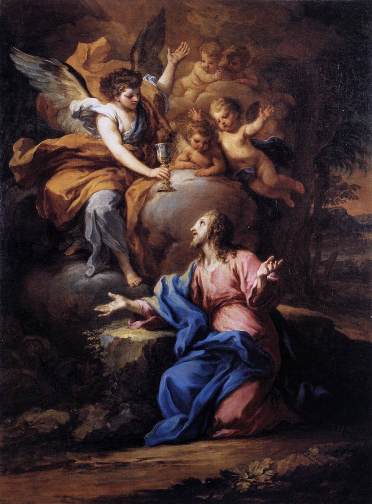
And he said, "Abba, Father, all things are possible to thee; remove this cup from me; yet not what I will, but what thou wilt." (Mark 14:26)
He could make this prayer because He trusted God.
Christ as a Model of Trust in God
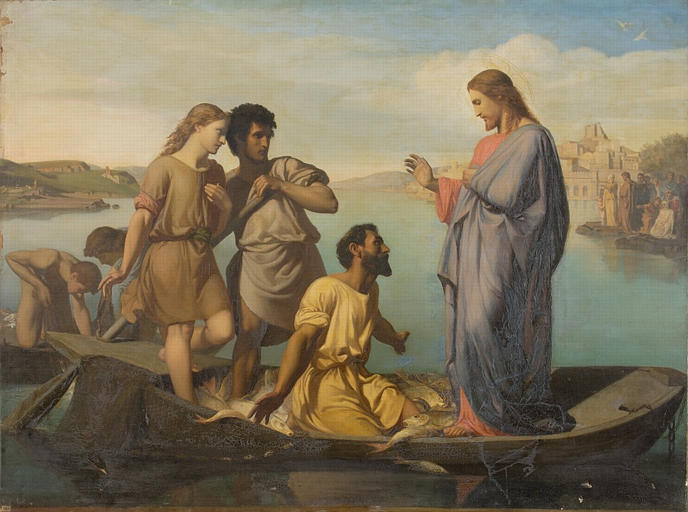 Jesus' will was so perfectly aligned with the will of the Father that He could place His trust in the Father so completely and obey the will of the Father unto death.
Can you do that in your life? Can you follow the apostles lead and drop your nets to follow Jesus? (Mt 4:20) It takes a radical trust and abandonment of will to do that. It takes an interior conversion of the heart, and an interior conversion that will manifest itself in exterior ways. We can do that and we have guides, fellow pilgrims like Saint Francis of Assisi.
Saint Francis and the Sequela Christi
We can look to the lives of the Saints when we need help in knowing how to drop our nets and follow Jesus. A perfect example of this is Saint Francis of Assisi. His life was one of radical abandonment to follow Jesus, to demonstrate the Sequela Christi.
Saint Francis, A Model of Meekness and Humility
About Saint Francis, Saint Bonaventure says,
"Humility, the guardian and glory of all virtues, abounded in rich fullness in [Saint Francis]. In his own estimation, he was naught but a sinner, whereas in very truth he was the mirror and brightness of all saintliness"
Saint Francis named his brother Minors and that the rulers of his order should be called ministers after Christ's words, "Whoseover will be great among you, let him be your minister". On one occasion on the of the Brothers Minor had a vision of heaven in which the throne left vacant by the fallen angels was reserved for Saint Francis. Upon being informed of the vision, Saint Francis responded, "If any man, howsoever guilty, had received such mercy from Christ as I, I verily think he would have been far more acceptable unto God than I."
Saint Francis, His Devotion to Prayer
Saint Francis lived a life of fervent prayer. On one occasion as he rode an ass through the city of Borgo San Sepolcro he was mobbed by the townsfolk who marveled at his holiness. Btu he was so fervent in his prayer that he did not even recognize the people and upon arriving at the leper settlement he was headed his brothers told him and he had no recollection. Much like Jesus Saint Francis loved to pray in solitude and upon returning from hi solitude he was often changed almost into another man.
Saint Francis, His Radical Trust In God
One of the most famous accounts of his trust in god came from his travels to Persia where the Muslims and Christians were at all out war. Saint Francis traveled to the Sultan of Babylon to preach the Gospel and suffer a martyrs death. Upon arrival in Babylon he miraculously obtained an audience with the Sultan who, rather than martyring Saint Francis, honored and glorified the faith and trust in God demonstrated by Saint Francis.
Do we live the Sequela Christi?
The Sequela Christi is the path to doing "the good", to living the divine beatitude. In order to follow that path we must act as Jesus acted, we must come to know Him, to trust Him and to bend our will to His. The desire sought in the Sequela Christi is summed up in the following prayer of Flannery O'Conner,
Please help me to know the will of my Father—not a scrupulous nervousness nor yet a lax presumption but a clear, reasonable knowledge: and after this give me a strong Will to bend it to the will of my Father.
Subscribe to:
Posts (Atom)